

Breed introduction
History
The Australian Shepherd is one of the newest herding breeds in the world. The breed’s history reaches back about 100 years. Although the breed’s name points to the green continent, its true homeland is America. One of the more popular theories about the name is that “those little blue dogs” arrived in America together with Basque shepherds from Australia at the beginning of the 19th century.
And they were consequently named Australian Shepherds.
The book “All About Aussies” mentions that the Australian Shepherd was bred from the Border Collie, the Pyrenean Shepherd, the long-haired Collie and the now-extinct Smithfield dog.
The Americans’ aim was to breed in the Aussie (the common nickname for the Australian Shepherd) a dog able to do its work in all weather conditions (in ice-cold rain, in snow and under a blazing sun).
A dog that would be fast, clever, energetic, hardy and with excellent working qualities.
Breeding concentrated primarily on behavioural and working qualities.
Only those dogs that coped well with their work were allowed to continue the line.
Temperament
The Australian Shepherd is an intelligent, medium-sized dog with strong herding and guarding instincts.
It is a pleasant and loyal companion and an excellent family dog.
It likes to be involved in everyday chores and activities, enjoying its owner’s company.
It is like a shadow, following its owner everywhere. As a diligent herding dog it takes its duties very seriously, whether it happens to be working the herd, guarding the house or carrying out some other task it has been given.
Today Aussies are also used as search-and-rescue and therapy dogs, and they compete in a variety of dog sports.
An Aussie suits an active person above all. The breed’s energy can take many people by surprise. They run, jump and romp about a great deal. An Aussie’s owner should be prepared to give the dog enough to do, through both exercise and mental work.
An Aussie is happiest when it can tire itself out both physically and mentally.
Among the breed’s strengths are certainly its cheerfulness, its sense of humour and its wish to be close to its owner.
An Aussie’s owner never has to worry about being lonely, because an Aussie is ready to accompany them everywhere: in the bathroom, in the toilet, doing the laundry, cooking, watching television and so on.
They are willing to be anywhere (in the car, on the bus), as long as they can be near their owner.
With Aussies, however, it should certainly not be forgotten that they have a strongly developed protective instinct and are ready to give their lives defending their owner. Above all, behind that sweet, teddy-bear-like appearance there is still a capable working dog.
Aussies differ from one another in both nature and appearance. Whereas with some other breeds it can seem that one dog is a copy of the next and only their owners can tell them apart, with Aussies it is rather the opposite.
Two identical Aussies are hard to find; the differences start with ear set, height at the withers, eye colour, tail length…
The most common colours are: red and black tricolor, red and black, red and blue merle.
Less common are red and black bicolor, and red and blue merle without tan markings.
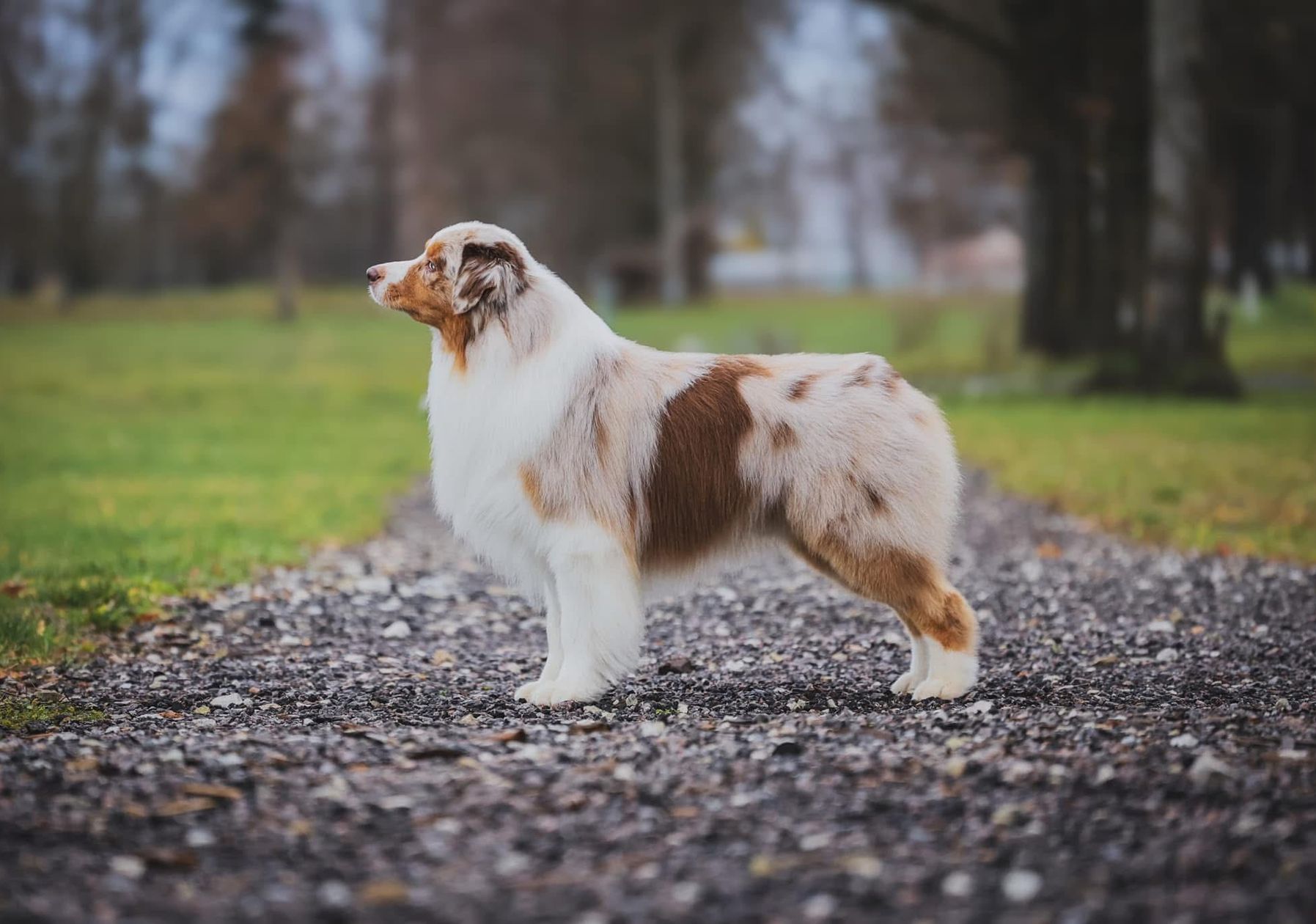
Red merle
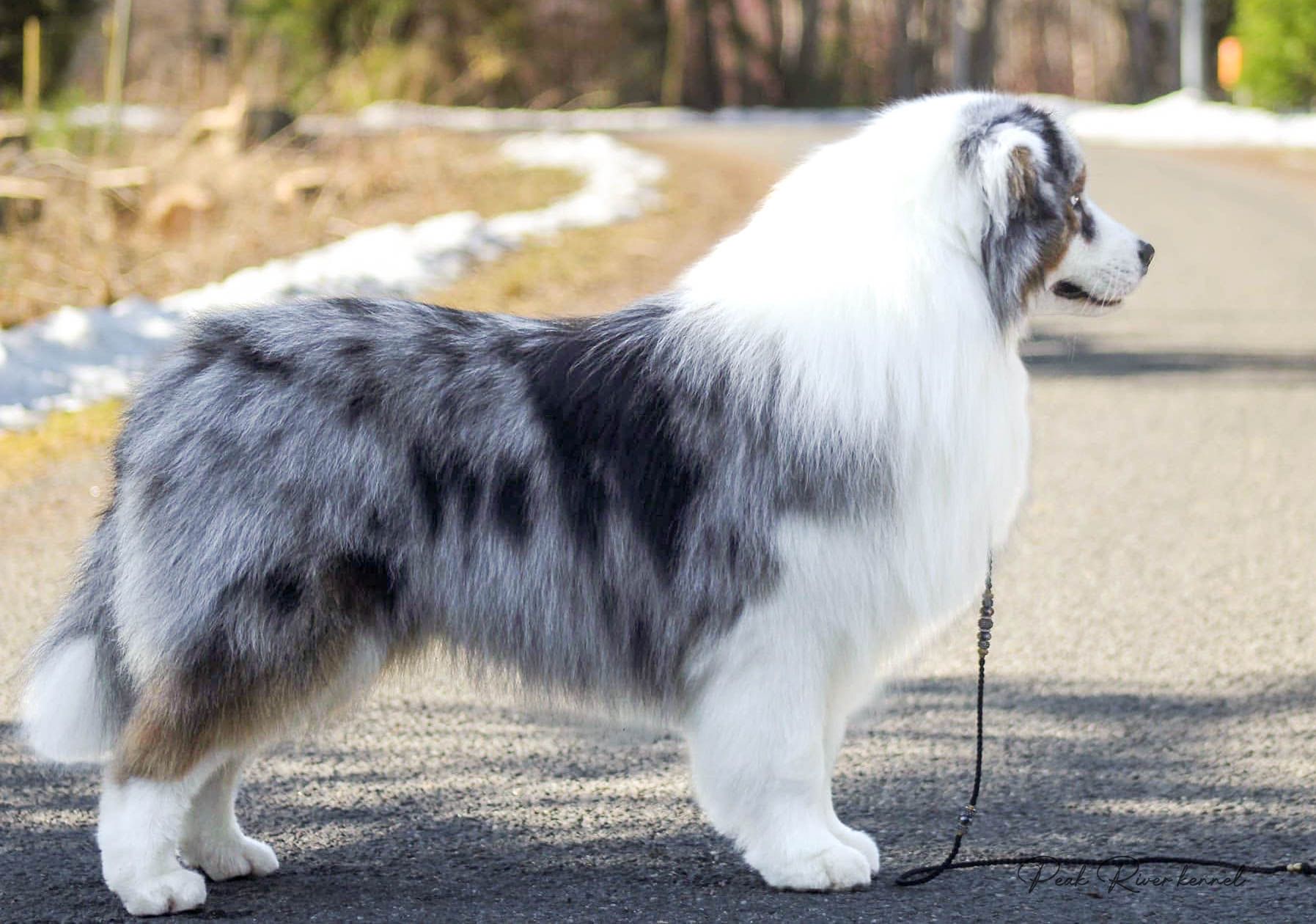
Blue merle
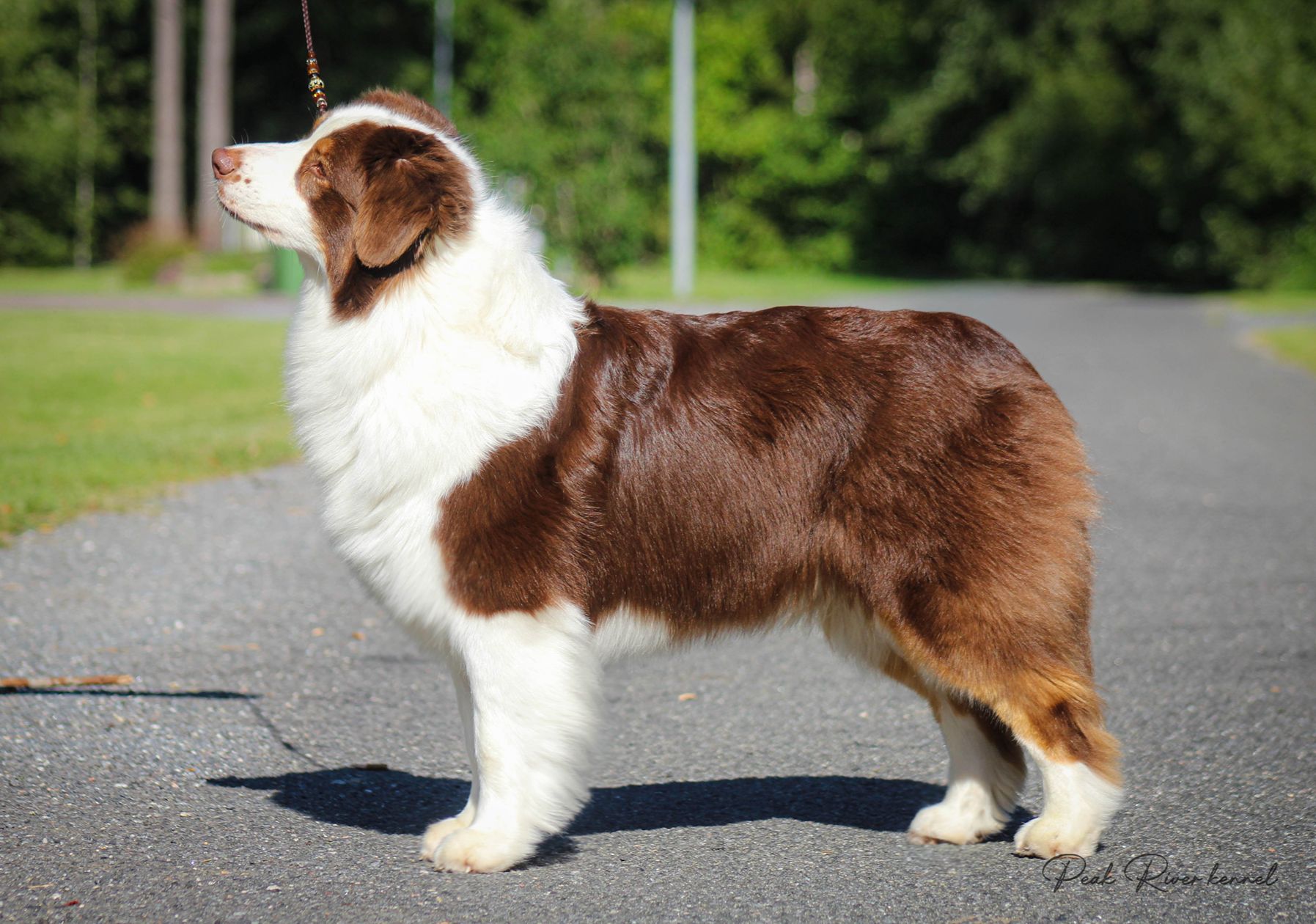
Red tricolor
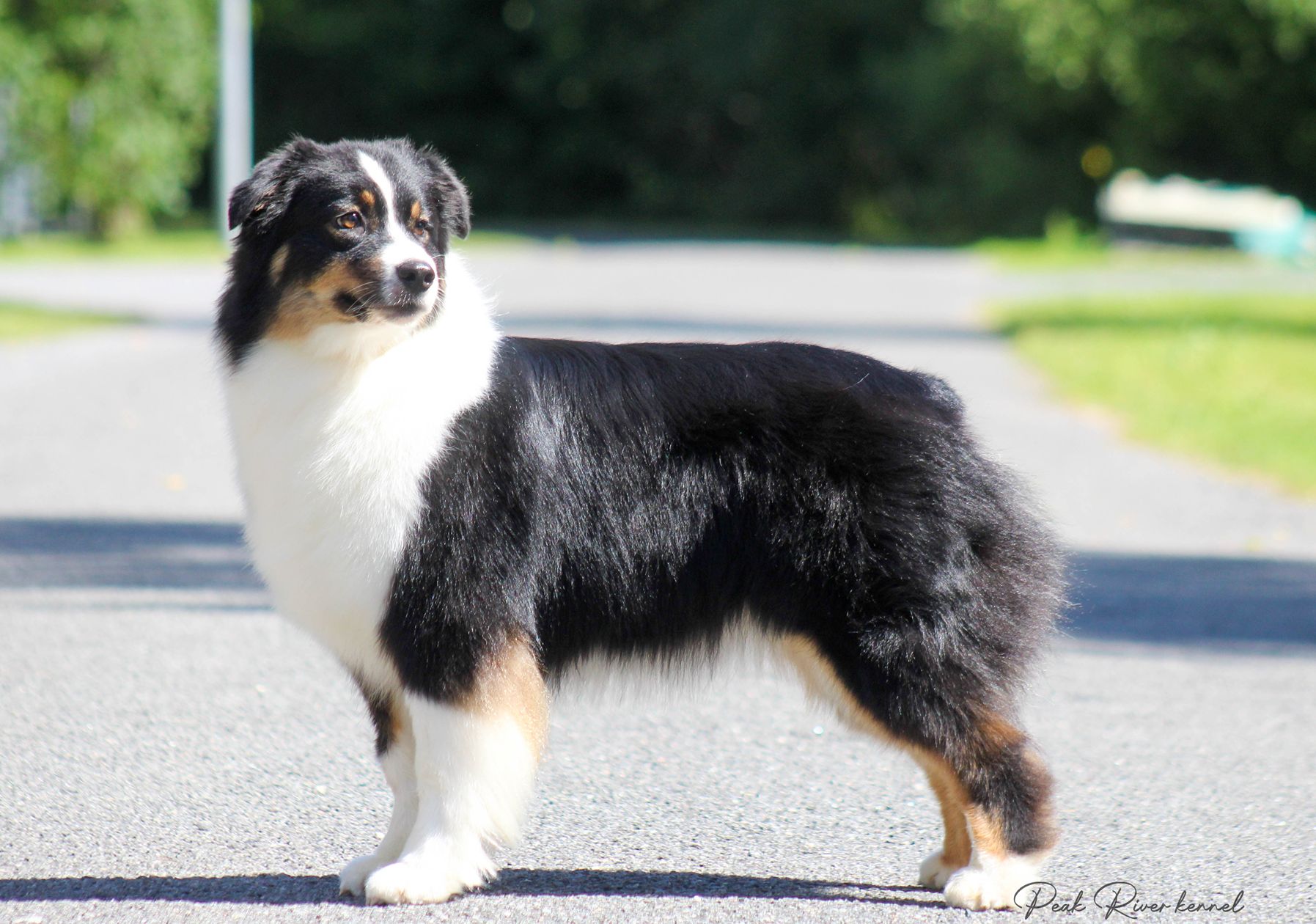
Black tricolor
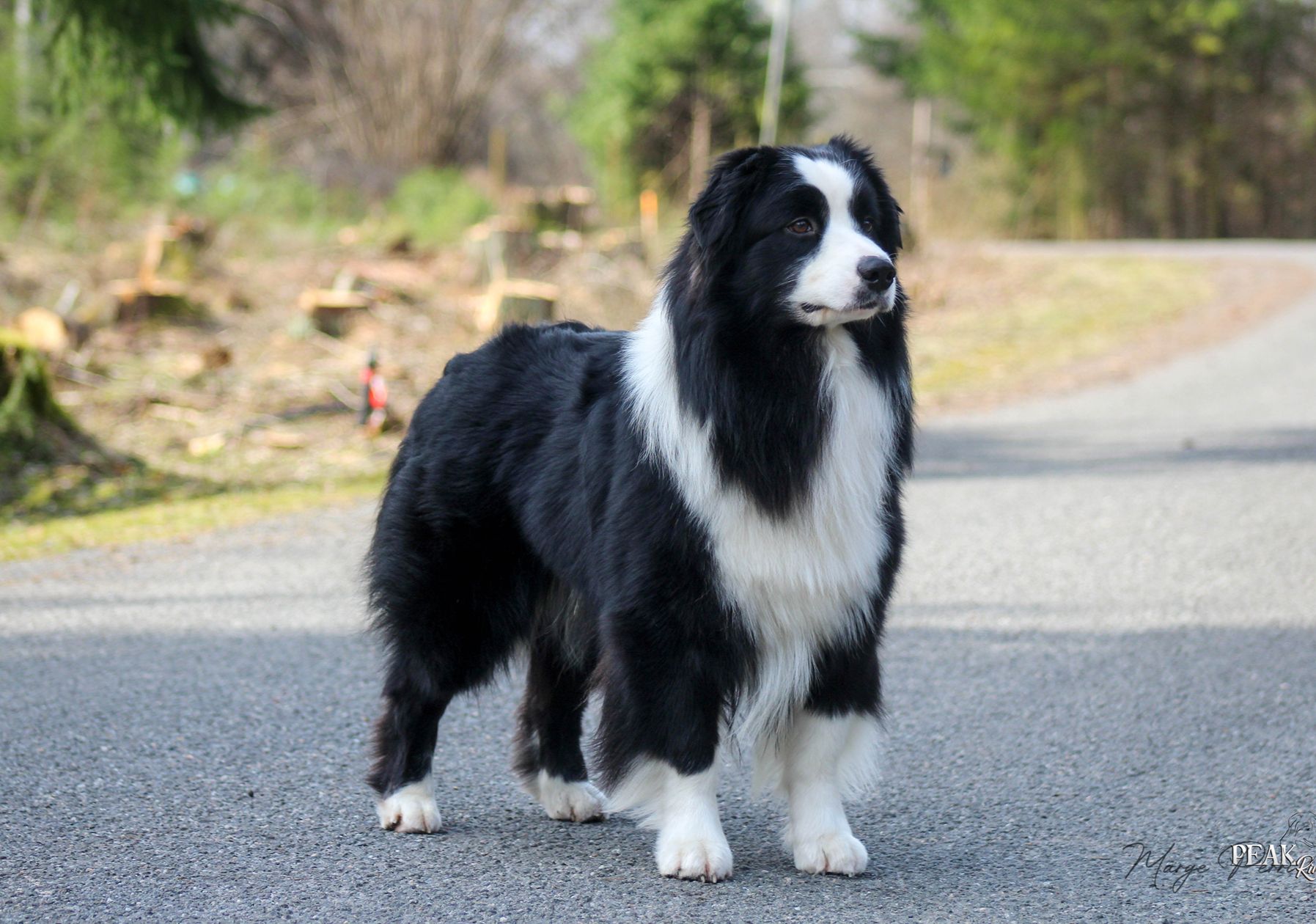
Bicolor
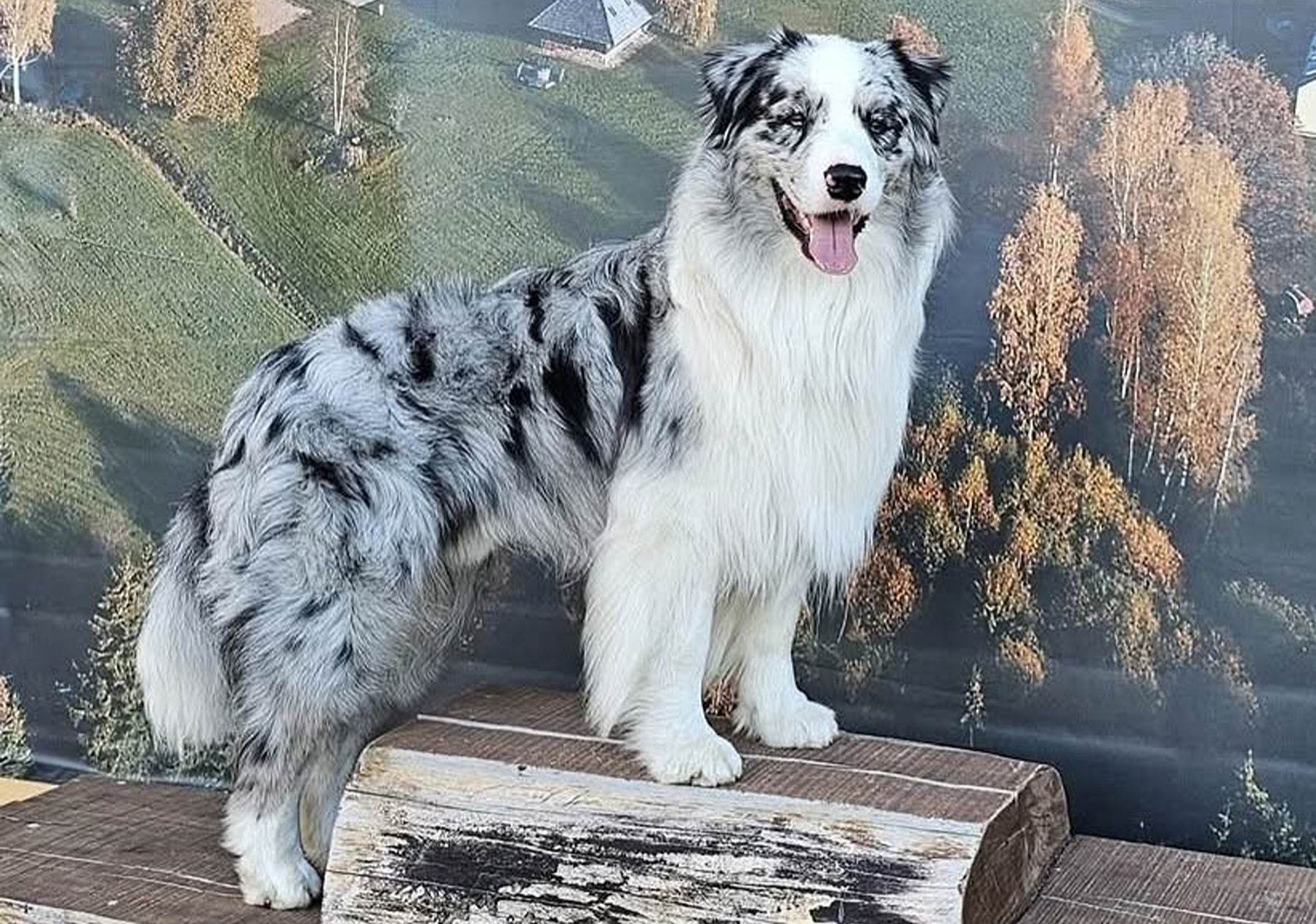
Blue merle bicolor
Help for beginners
Whether with papers or without, we recommend reading: HERE
Would you like an Australian Shepherd of your own?
Before making your decision, familiarise yourself with the breed’s temperament and needs, with the work of the breeder you have chosen, and also with the breed club’s breeding recommendations.
Although no one can guarantee that healthy, tested parents will produce 100% healthy offspring, the chances of gaining a healthy and long-lived friend are still greater where the recommended examinations have been carried out on the parents.
Is an Australian Shepherd right for our family?
Taking any puppy into your family brings with it a 12–15 year commitment to care for it. Very often people are enchanted by a sweet puppy without thinking about the obligations that come with it, which frequently ends in heartbreak, or in owning a dog that does not fit the family’s lifestyle. If you are planning to take on an Australian Shepherd puppy or an adult dog, you should first read and find out as much as possible about the breed, and then consider whether an Australian Shepherd really is the right dog for you. We hope the following discussion helps you decide!
The breed’s origins and character
Australian Shepherds were bred as “farm dogs”, and not only to work stock but also to be companions and to guard the family and their property. An Australian Shepherd is equally happy working and spending time with its family. An Australian Shepherd is deeply devoted to its family.
Because an Australian Shepherd has to follow its owner’s commands very precisely when working stock, this is a highly trainable, intelligent breed that wants to please its owner. Without these qualities an Australian Shepherd could not work as a herding dog. It is a versatile working dog, used with cattle, sheep, goats and even poultry. Australian Shepherds have long been the preference of smallholders who need a dog’s help but do not have a herd large enough to keep a dog in constant work.
Bond with the owner and attitude towards strangers
An Australian Shepherd’s bond with its owner is one of the breed’s principal legacies. Historically, Australian Shepherds were often trusted to watch over the family’s children while both parents worked in the fields. The family’s valuables and animals were all safe when their Australian Shepherd was with them.
Many Australian Shepherds are friendly with everyone, although the breed is generally reserved and cautious with strangers. More cautious dogs can be trained to accept strangers, but with some Australian Shepherds this never succeeds.
Australian Shepherds often form a stronger bond with their owner than many other breeds do. For this reason some Australian Shepherds may become protective of their owner when they sense a threat. It should be borne in mind that a dog of any breed can become aggressive if it has not been sufficiently trained and socialised.
Exercise and training
Australian Shepherds were bred to herd livestock, but since many dogs are not used for herding today, their intelligence and energy must be channelled in other ways. Attending obedience training is highly recommended – Australian Shepherds are quick learners. If an Australian Shepherd has grown up with children, they become excellent friends.
You do not necessarily need a farm to keep an Australian Shepherd, but they still need a great deal of exercise and attention each day. Young dogs (of any breed) need more exercise and activity than older dogs. Most Aussies like to play with a ball or a Frisbee, and most enjoy water and swimming.
If you are looking for a breed with a strong desire to please its owner and great loyalty both to its owner and to the whole family, the Australian Shepherd is a wonderful companion. It makes an excellent working partner if you keep livestock. You should bear in mind the Australian Shepherd’s territoriality and its urge to protect its owner and home. You yourself and your living environment largely determine what kind of dog your puppy grows into.
The breed standard
The breed standard describes the Australian Shepherd as follows:
The Australian Shepherd is an intelligent dog, used primarily as a working dog, with strong herding and guarding instincts. It is an excellent companion. The Australian Shepherd is versatile and easily trained, performing the tasks it is given properly and enthusiastically. It is reserved with strangers but not shy. Although it is a forceful and authoritative working animal, aggression towards people or animals is unacceptable.
If, after reading this description, you are convinced that the Australian Shepherd suits your family, your way of life and your expectations, then enjoy your future Aussie!
A puppy with a colour fault, a puppy with a bite fault – what does that mean?
Even purebred dogs have things that prevent them from taking part in one activity or another – mostly shows and breeding!
In Aussies, excessive white on the face (the areas around the eyes must not be white) is considered a disqualifying fault, as are white patches on the back and an incorrect bite. These are disqualifying faults at shows, but they do not stop a dog from taking part in various activities or from being a loving companion to its family.
Breeders mostly sell such puppies as so-called “pet quality” at a lower price and with a contract stating that the dog is not suitable for breeding or for showing.